
HEALTH & FITNESS BLOG IN MT AIRY
HEALTH & FITNESS BLOG
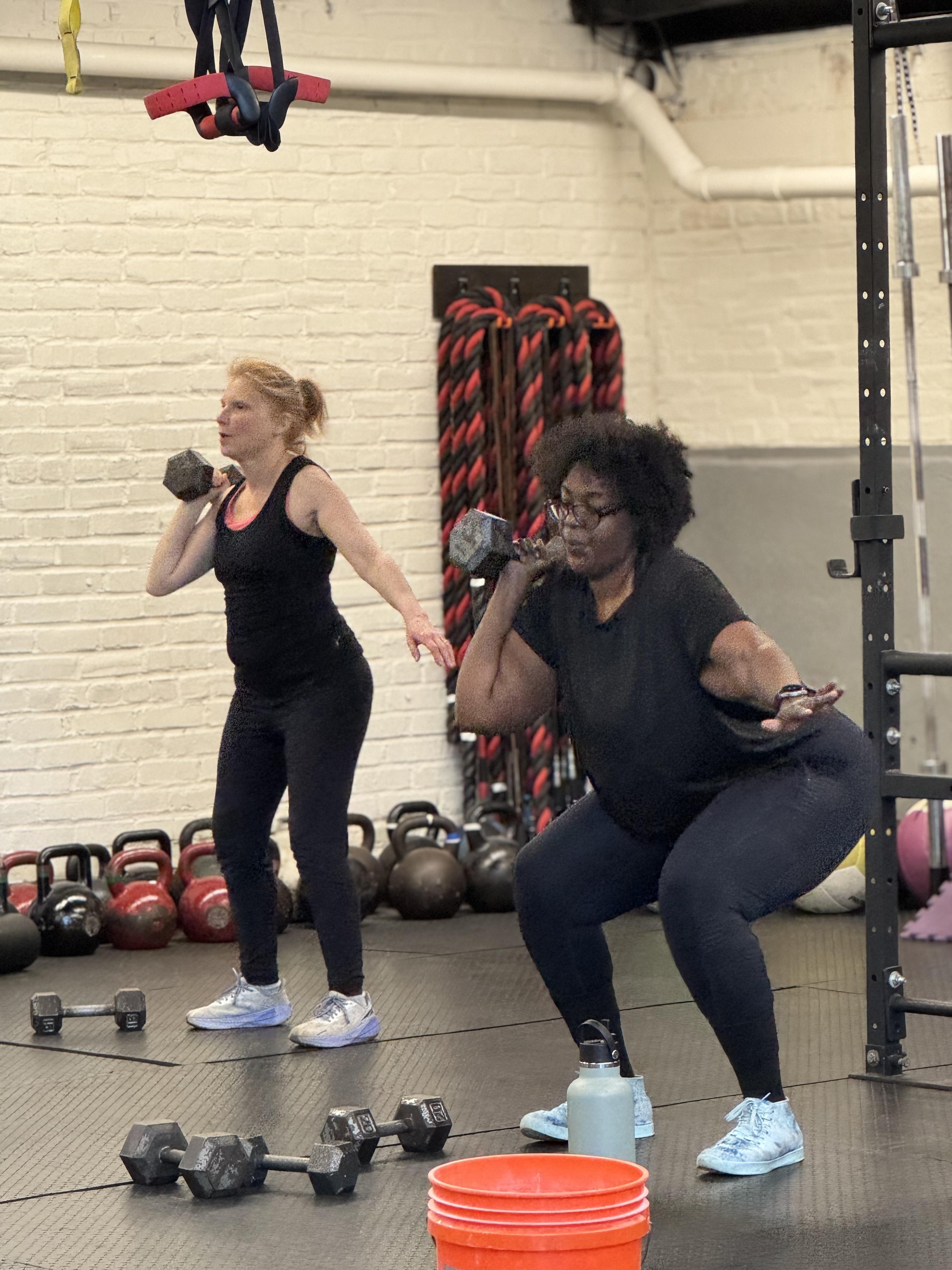
Lifting the Same Weight Twice
Lifting the Same Weight Twice
How to Choose the Right Weights to Build Real Strength At Any Age
Strength training is one of the most important things you can do for your health, longevity, and confidence, especially as we age. Any lifting is better than no lifting. But if you’re already showing up, putting in the work, and committing your time and energy, it’s worth making sure that work is intentional.
At Urban Athlete in Philadelphia, we coach strength training with purpose. Our approach is rooted in decades of education, real-world experience, and the simple belief that strength should support your life and not just look good on paper.
One of the most common questions we hear in group training is:
“How heavy should I go?”
The answer isn’t one-size-fits-all but there is a framework that helps guide smart decisions, keeps you progressing, and reduces injury risk.
Why Weight Selection Matters in Strength Training
Lifting the same weight twice isn’t about ego or proving something. It’s about awareness.
When you repeatedly choose weights that are too light, you may feel like you’re “getting a workout,” but you’re often leaving the opportunity of getting stronger on the table. On the flip side, lifting too heavy without control or intention can stall progress and increase injury risk.
The goal is to match the weight to the intention of the workout and to listen to feedback from your body during and after each session.
A Simple Framework for Choosing Weights
At Urban Athlete, we coach weight selection based on rep ranges, not guesswork. Keeping in mind that this is a framework which means there will be days where you may need to make adjustments with the coaching team.
-Low Repetitions (1–5 reps): Lift Heavy [for You]
When reps are low, the intention is strength.
Choose a heavier weight for your body
You may need to build up to it through warm-up sets
The final rep should feel challenging, but not like total failure
You should still be able to maintain excellent form
Heavy days aren’t about maxing out, they’re about teaching your body to produce force safely and confidently.
-Mid-Range Repetitions (6–10 reps): Go Moderate [for You]
This is where most strength training lives.
Choose a weight that feels solid and controlled
You should feel like you could do 2–3 more reps if needed
The last few reps should demand focus, not panic
This range builds strength, muscle, and resilience all at once.
-High Repetitions (11+ reps): Go Light Purposefully [for You]
High-rep work builds endurance, control, and joint stability.
Choose a lighter weight
You should feel capable of 3–5 more reps at the end of the set
Focus on breathing, tempo, and form
Light does not mean easy, it means intentional.
Not Every Day Is a “Heavy” Day and That’s Okay
We fully believe that not every day is the day to lift your heaviest weights.
Some days, showing up is the win. Some days, your nervous system, sleep, stress, or recovery simply isn’t primed for heavy loading and that’s the most valuable information, not failure.
Strength training should always be:
Controlled
Purposeful
Adaptable to how your body feels that day
Consistency over time matters more than any single workout.
Train With Control Always
Strength isn’t just about lifting the weight, it’s about how you move it.
We coach our clients to focus on:
Proper form
Controlled movements
Both the concentric(lifting) and eccentric(lowering) phases
Slowing things down builds more strength than rushing ever will. So I'll repeat it, "Slow it down!"
And if you’re unsure? Ask for a spot. Ask your coach. That’s what we’re here for.
A Smart Way to Build Strength Within a Set
Here’s a coaching tip many people overlook:
When reps are in the mid-to-high range, you don’t have to use the same weight the entire time.
Start heavier
Then decrease the weight to finish the set strong
Think of it like TRX rows:
You start with your body lower (harder), then walk your feet back (easier) to complete the set.
Same idea with push-ups:
Start with full-range push-ups
Then finish the set with a modified variation
Instead of defaulting to modified from the start
This builds real strength, not just volume.
Balancing the Left and Right Sides of Your Body
Most of us have a dominant side, the one that wants (and is usually able) to do more work.
Rather than reinforcing that imbalance, we coach strategies to even things out:
Use the same weight on both sides
Slightly reduce weight on the dominant side
Add an extra rep on the non-dominant side
Start heavier for 1–2 reps, then drop down
Balanced strength supports better movement, fewer injuries, and a longer, more active life.
Strength Training for the Long Game
Getting stronger isn’t about lifting the most weight in the room. It’s about:
Moving well
Staying active longer
Building confidence in what your body can do
Helping our community become the strongest version of themselves, physically and mentally, is exactly what we do at Urban Athlete.
Strength is built one intentional rep at a time. And when you learn how to choose the right weights for your body, you don’t just lift better you live better.

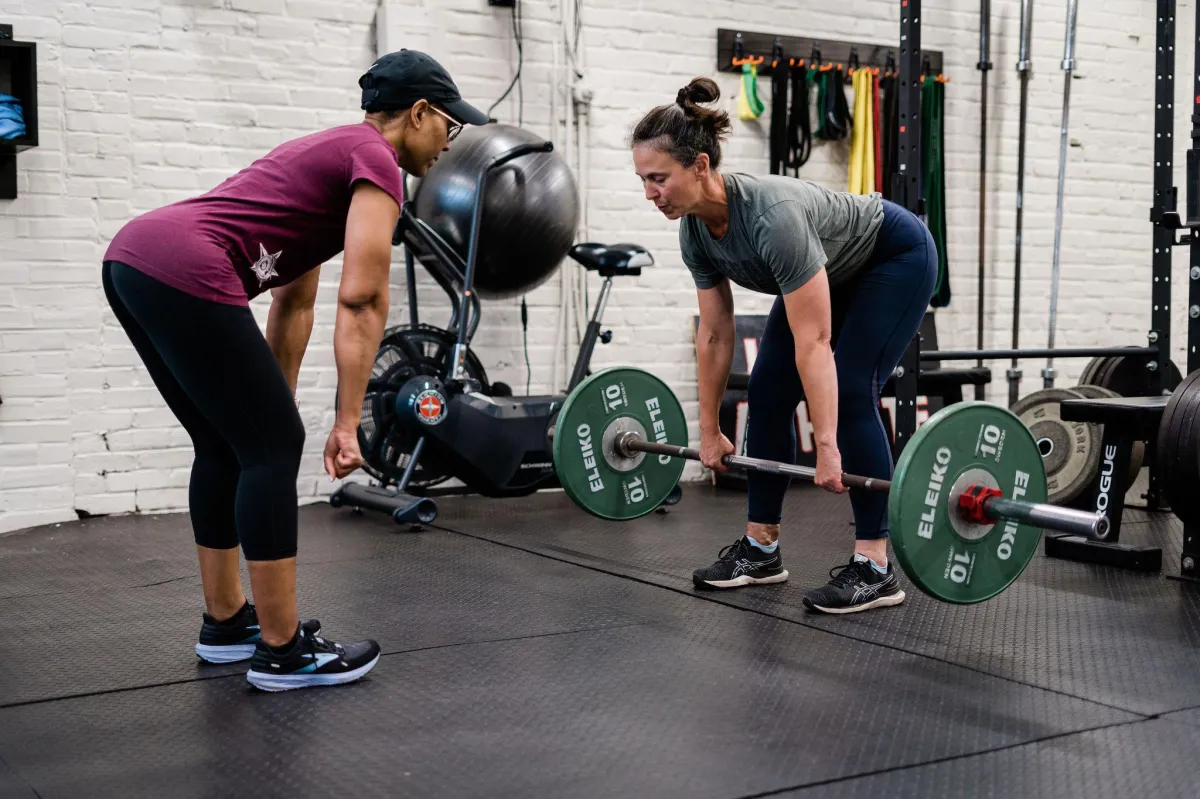
Ready To Jumpstart Your Journey Today?
Click The Button Below To Learn More!




© 2026 Urban Athlete
|
|
© 2026 Urban Athlete